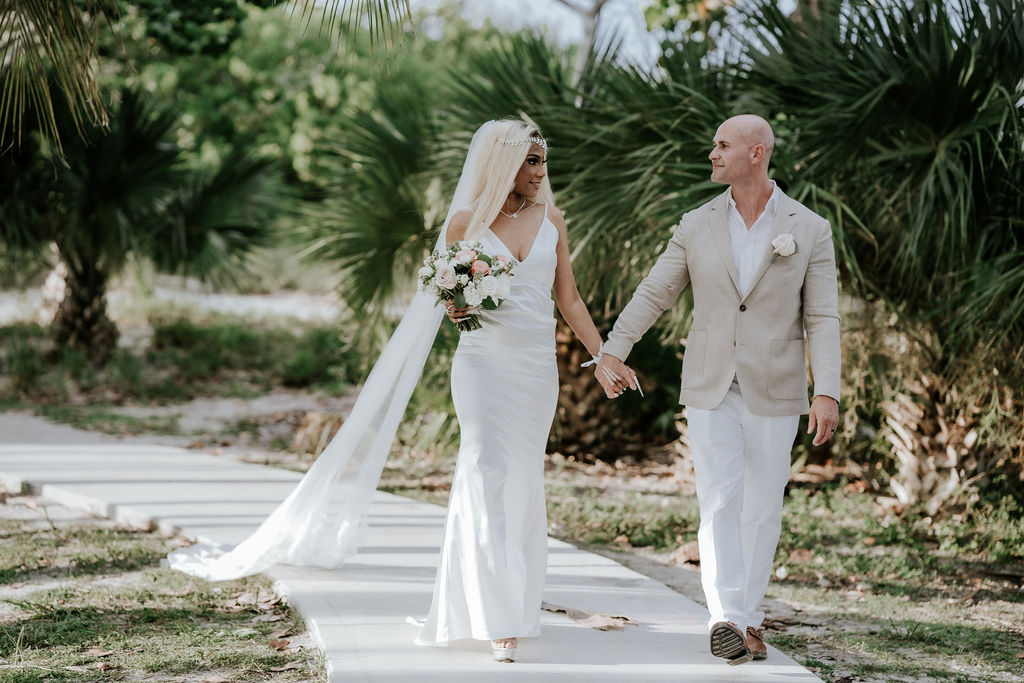
So you want to elope in Miami. Maybe you've been engaged for a while and the traditional wedding planning just isn't clicking. Maybe you knew from the moment the question was asked that a big production wasn't your thing. Either way, you're here, and that mix of excitement and "wait, how does this actually work?" is completely normal. I hear it from almost every couple I talk to.
Here's the thing: eloping is simpler than you think, but it does require some planning. Not the spreadsheet-and-seating-chart kind. The kind where you make a handful of important decisions, line up the right people, and then show up for each other. That's it.
This is the walkthrough I wish someone had handed me when I started planning elopements in Miami. Nine steps, start to finish.
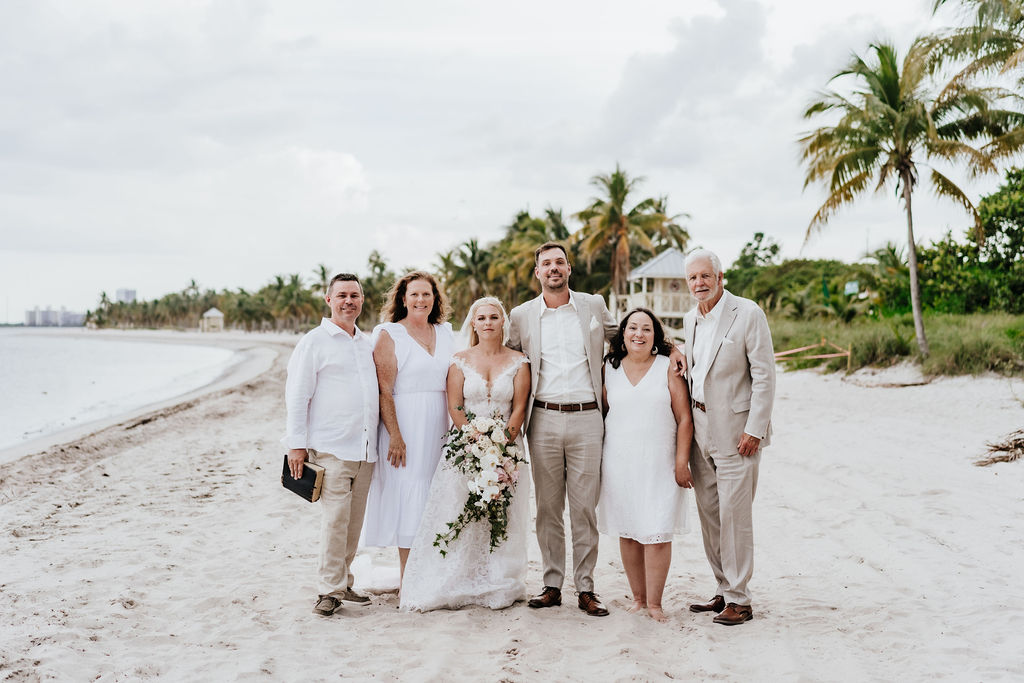
Step 1 — Decide this is what you want
Before you do anything else, sit with the decision. Not because eloping is something you need to justify, but because going in with full confidence changes how you experience every step that follows.
The most common hesitation I hear is about family. "My mom will be heartbroken." "His parents are expecting a wedding." These are real concerns, and they deserve honest conversations. But I'll tell you what I tell every couple who sits across from me with that worry in their eyes: your marriage is yours. Full stop. You can honor your families in a hundred ways — a reception later, a video call during the ceremony, handwritten letters — without giving up the intimacy that drew you to eloping in the first place.
The second hesitation is FOMO. Will I regret not having the big day? In my experience, the answer is almost always no. The couples who elope tell me the same thing afterward: "I was so present. I remember every word." That's hard to say about a 200-person reception where you barely ate dinner.
One couple I worked with, Ashley and Richard, went back and forth for months. They'd started planning a traditional wedding, felt the stress mounting, and finally called me. Ashley told me later that the moment they committed to eloping, it felt like exhaling for the first time in a year.
So decide. And once you decide, stop second-guessing.
Step 2 — Set your budget
A Miami elopement can cost anywhere from $2,000 for a truly minimal ceremony to $12,000 or more for a premium, fully styled experience with luxury touches. Most of my couples land somewhere in the $4,000 to $8,000 range.
Here's a rough breakdown of what goes into that number:
- Officiant: $200–$500
- Photography (2–3 hours): $1,500–$4,000
- Flowers (personal bouquet + boutonniere): $150–$600
- Hair and makeup: $250–$500
- Marriage license: $93.50
- Location permit (if needed): $50–$300
- Planning/coordination: $500–$2,000
- Dinner after: $200–$800
The biggest variable is photography. It's also the thing you'll care about most a year from now, so don't cut corners there.
I've written a detailed cost breakdown if you want to see exactly where each dollar goes and how to prioritize based on what matters to you.
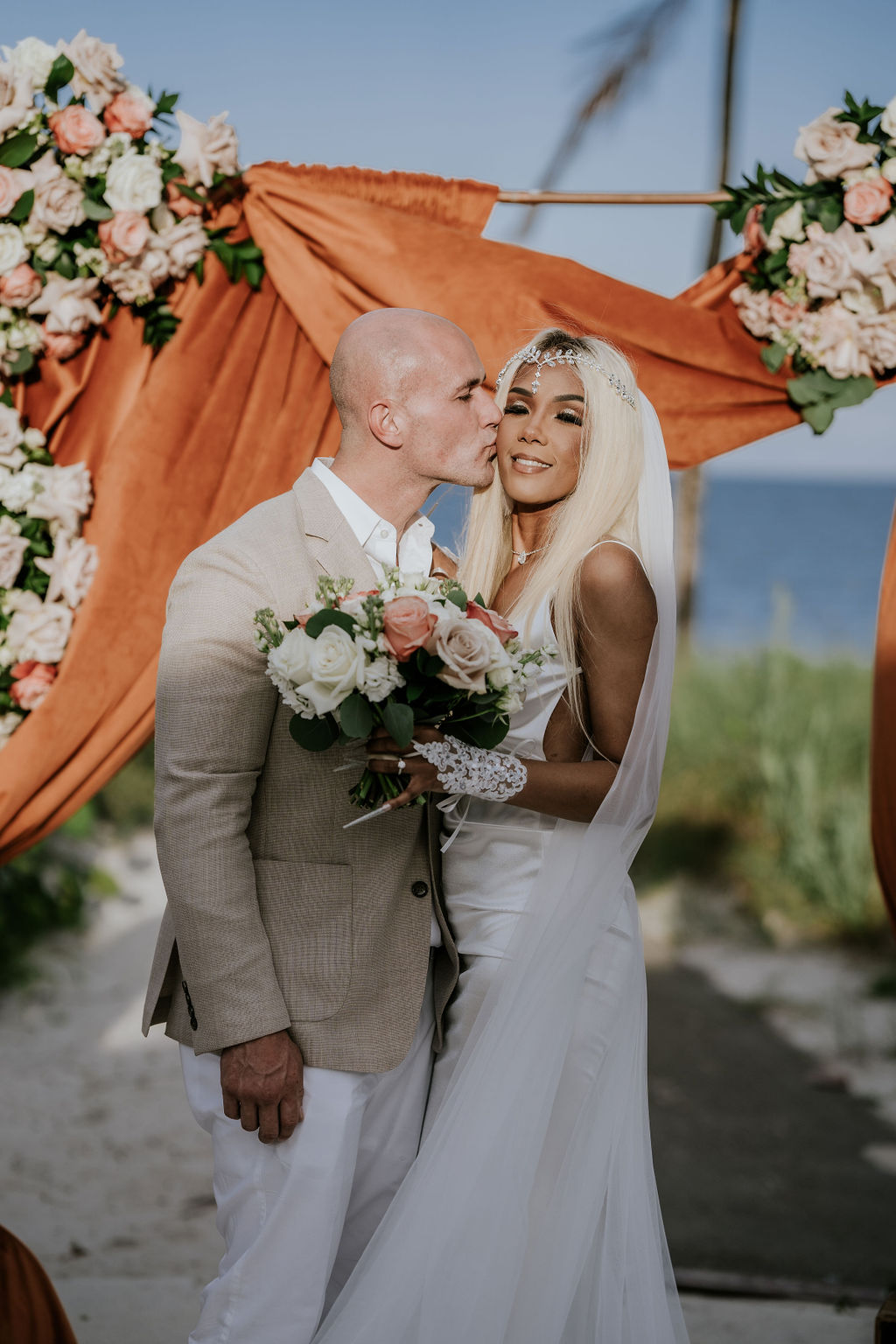
Step 3 — Pick your date
Miami is a year-round elopement destination, but not every month is equal. The sweet spot is November through April — dry season, lower humidity, gorgeous light. May through October brings afternoon rain showers and peak hurricane season, though plenty of couples still elope during those months and have incredible days.
A few timing tips that save money and stress:
Go weekday. Tuesday through Thursday elopements are often $200–$500 cheaper across vendors. Beaches are emptier. Restaurants are easier to book. There's no reason to pay weekend pricing for a two-person ceremony.
Avoid spring break. Mid-March through mid-April means crowded beaches, higher hotel rates, and South Beach foot traffic that'll photobomb your ceremony. If you want beach photos without strangers in the background, skip those weeks.
Morning vs. sunset. Sunrise ceremonies (around 6:30–7:00 AM depending on season) give you empty beaches and soft light. Golden hour (starting around 5:30–6:00 PM in winter, 7:00–7:30 PM in summer) is the most popular and photographs beautifully. Both work. Pick what matches your energy.
For a deeper look at seasonal considerations, check my guide on the best time to elope in Miami.
Step 4 — Choose your location
Miami gives you more variety in a 30-mile radius than most cities offer in an entire state. Your main categories:
Beach ceremonies. The classic. Crandon Park on Key Biscayne is my personal favorite — it's less crowded than South Beach and has palm trees lining the shore. South Pointe Park at the tip of South Beach gives you skyline views. Bill Baggs Cape Florida State Park has the historic lighthouse as a backdrop.
Garden and estate venues. Vizcaya Museum and Gardens is the iconic choice — Renaissance Italian architecture, formal gardens, and waterfront views. The Kampong in Coconut Grove is a hidden gem with tropical botanical gardens. Ancient Spanish Monastery in North Miami is exactly what it sounds like, a 12th-century Spanish monastery reassembled stone by stone in Florida.
Urban settings. Wynwood's murals, the Art Deco district, Brickell's rooftop bars. These work especially well for couples who want a less traditional backdrop and great street-style photos.
Private venues. Some couples prefer a boutique hotel suite, a yacht, or a private rooftop. These typically run higher in cost but give you complete privacy and no permit hassles.
I go into much more detail — including permit requirements and pricing for each location — in my complete guide to Miami elopement spots.
Step 5 — Get your marriage license
Florida requires a marriage license before you can legally marry. Here's what you need to know for Miami-Dade County.
Cost: $93.50 (cash or card accepted).
Where: The Miami-Dade County Clerk's office at 73 W Flagler Street, Suite 238, Miami, FL 33130. You can also apply at satellite locations in Coral Gables, Hialeah, and South Dade.
What to bring: Valid government-issued photo ID for both parties. If previously married, bring your final divorce decree or death certificate.
The waiting period: This is where people get tripped up. Florida residents who complete a premarital course have no waiting period. Non-residents must wait three days after the license is issued before the ceremony can take place. You can skip the three-day wait by completing a premarital preparation course from a registered provider — it takes about four hours and can be done online.
Expiration: The license is valid for 60 days once issued.
Filing after the ceremony: Your officiant signs the license and returns it to the clerk's office. You'll receive your certified marriage certificate by mail, usually within two to four weeks.
I've put together a full Florida marriage license guide that walks through every detail, including how out-of-state and international couples should handle the process.
Step 6 — Book your package or build your vendor team
You have two paths here: hire an elopement planner who bundles everything together, or source each vendor yourself. Both can work. But I'll be honest about the trade-offs.
The package route saves time, reduces stress, and usually saves money because planners have negotiated rates with their vendor partners. You get a coordinator who knows the permit process, has backup plans for weather, and handles the timeline so you can focus on each other. This is what I do at ElopMe, and our elopement packages start at $2,495 and include officiant, photography, coordination, and more.
The DIY route gives you maximum control. You choose every vendor individually. This works well if you already have a photographer you love or an officiant who's meaningful to you (a friend who got ordained, a family pastor). Just know that coordinating four to six vendors across different communication channels takes real time and energy.
At minimum, you need:
- A licensed officiant (required by Florida law to perform the ceremony)
- A photographer (trust me on this one — you'll want the photos)
- A florist for a bouquet and boutonniere (optional but worth it)
- A hair and makeup artist if desired
One thing I always suggest: book your photographer first after your officiant. Great elopement photographers in Miami book out two to three months in advance, especially during peak season.

Step 7 — Plan the personal details
This is the step most people underestimate, and it's the one that makes the biggest difference. The logistics are important, but the personal touches are what you'll remember.
Write your own vows. I cannot stress this enough. Even if public speaking terrifies you, even if you think you're not a good writer. Your vows don't need to be poetry. They need to be true. I give my couples a simple framework: one thing I love about you, one thing I promise you, and one thing I'm looking forward to. That's enough to start.
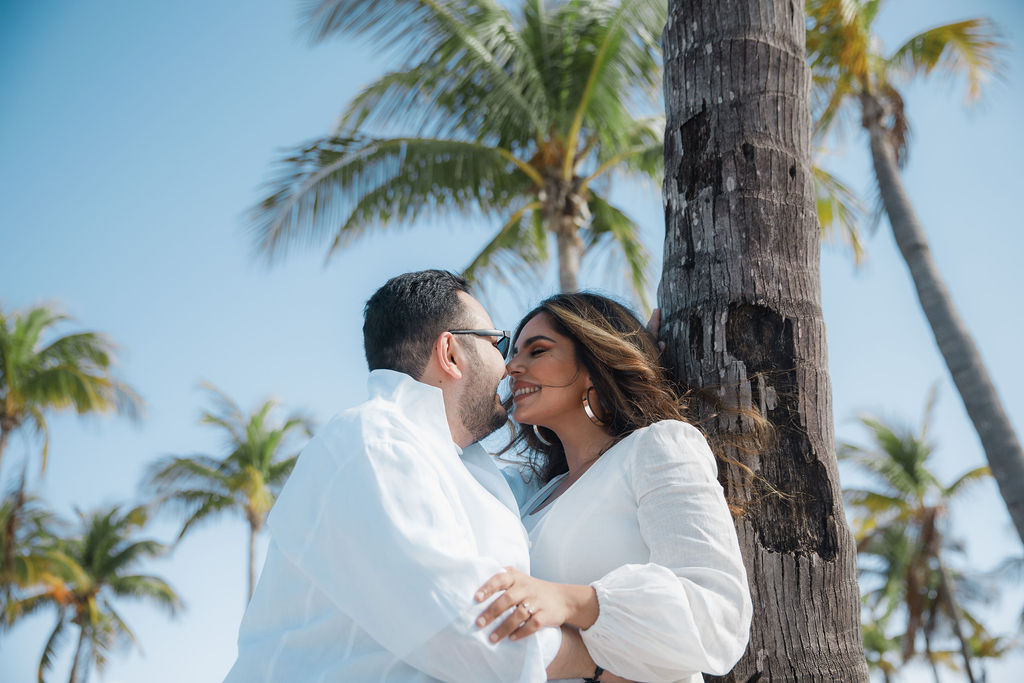
Choose your outfits thoughtfully. Miami's climate means lightweight fabrics are your friend. Linen suits, flowy dresses, breathable materials. Skip the heavy satin ball gown — you'll be miserable in 80-degree heat. And wear shoes you can walk in on sand, grass, or cobblestones depending on your venue. I have a full Miami elopement outfit guide with specific recommendations.
Pick a song. Walking down a beach without music feels different than walking toward your partner while your song plays from a portable speaker. It doesn't have to be complicated. One couple had their best friend play ukulele. Another just played a Bluetooth speaker tucked behind a floral arrangement. Both were perfect.
Add one meaningful detail. A locket with a grandparent's photo pinned inside a bouquet. A reading from the book where you had your first date in the margins. A toast with the same wine from your first dinner together. Small, specific, and personal beats elaborate every time.
Step 8 — The day of
Here's what the actual day looks like. I'm going to give you two timelines because the flow depends on when your ceremony happens.
Sunset ceremony (most popular):
- 2:00 PM — Hair and makeup begins (at your hotel or rental)
- 3:30 PM — Get dressed, put on finishing touches
- 4:00 PM — "First look" photos if you want them (some couples prefer to see each other at the ceremony for the first time)
- 4:30 PM — Travel to ceremony location
- 5:00 PM — Arrive, settle in, brief walkthrough with officiant
- 5:30 PM — Ceremony (typically 15–25 minutes)
- 6:00 PM — Couple portraits during golden hour
- 7:00 PM — Wrap photos, head to dinner
- 7:30 PM — Celebration dinner for two
Sunrise ceremony:
- 5:30 AM — Meet photographer at location
- 6:00 AM — Getting-ready photos in natural morning light
- 6:30 AM — Ceremony at sunrise
- 7:00 AM — Portraits on the empty beach
- 8:00 AM — Champagne toast, wrap up
- 9:00 AM — Brunch celebration
On the day itself, your only job is to be present. If you've hired a coordinator, they're handling the timeline, the vendor arrivals, and any curveballs. If it's just you and your vendors, designate someone (your photographer is often a good choice) to keep things moving.
And yes, it goes fast. The ceremony itself is usually 15 to 25 minutes. But those minutes are some of the most vivid you'll ever experience.
Step 9 — After the elopement
The ceremony is over. You're married. Now what?
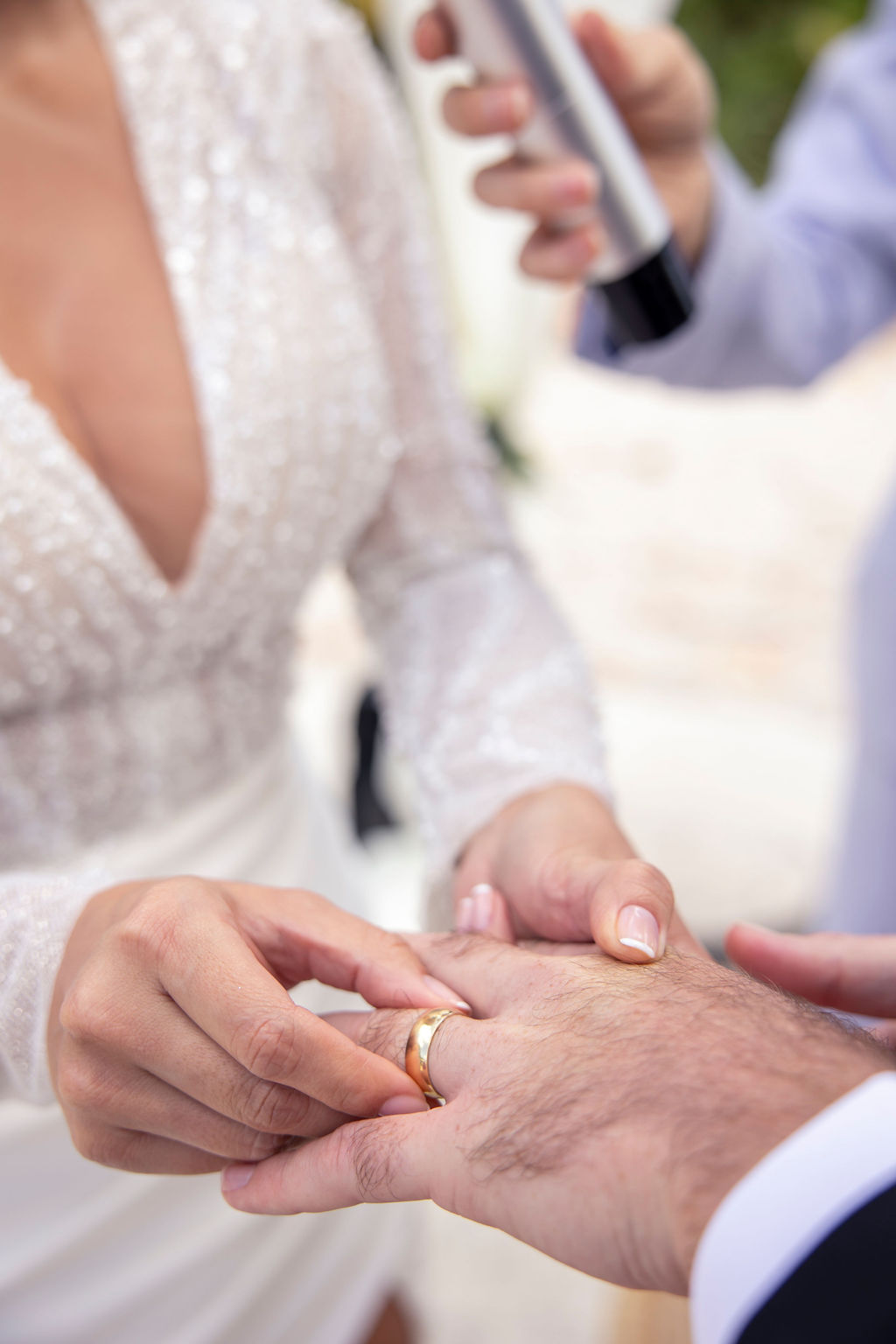
File the paperwork. Your officiant returns the signed marriage license to the Miami-Dade Clerk's office within 10 days. You'll receive your certified marriage certificate in the mail. Order a few extra certified copies — you'll need them for name changes, insurance updates, and bank accounts.
Announce it. You have options. Some couples post on social media that evening with a few sneak-peek photos. Others send printed announcements weeks later. A few I've worked with hosted a "we eloped!" party a month afterward and surprised everyone. There's no wrong way to share the news, but having a plan prevents the awkwardness of people finding out randomly.
Celebrate with dinner. Miami has incredible restaurants for a post-elopement dinner for two. A few I recommend to my couples:
- Juvia (1111 Lincoln Road, Miami Beach) — rooftop restaurant with panoramic views, French-Japanese-Peruvian fusion. Ask for a terrace table at sunset. Entrees run $35–$65.
- Mandolin Aegean Bistro (4312 NE 2nd Avenue, Design District) — Mediterranean food in a charming garden courtyard. Feels like a private celebration. More intimate and moderate pricing, $25–$45 per entree.
- The Surf Club Restaurant by Thomas Keller (9011 Collins Avenue, Surfside) — if you want to splurge. Refined American cuisine from a legendary chef. Tasting menus start around $185 per person.
Start the name change process (if applicable). Update your Social Security card first, then your driver's license, then everything else — bank accounts, passport, employer records. It's tedious but straightforward. Give yourself a few weeks after receiving your certified marriage certificate.
Frequently asked questions
How far in advance should I plan a Miami elopement?
Six to eight weeks is comfortable for most couples. That gives you time to get the marriage license, book vendors, and handle travel. I've pulled off elopements in as little as two weeks when schedules align, but a month and a half gives you breathing room without the drawn-out stress of a long engagement. Peak season (December through March) books up faster, so aim for eight to twelve weeks during those months.
Can we elope in Miami with just the two of us?
Absolutely. Many of my couples do exactly that — just the two of them, an officiant, and a photographer. Florida does not require witnesses to be present at the ceremony (some states do, but Florida isn't one of them). It's completely legal and completely beautiful. Some of the most emotional ceremonies I've seen have been just the couple.
Do we need witnesses to get married in Florida?
No. Florida is one of the states that does not require witnesses at the marriage ceremony. Your officiant signs the marriage license and files it. That said, if you want to bring a friend or two, they're welcome — they're just not legally necessary.
What happens if it rains on our elopement day?
Rain is a reality in Miami, especially during summer. Here's how I handle it: every elopement I plan has a backup plan built in. If rain is in the forecast, we monitor it closely in the 48 hours leading up. Miami rain is often brief — a 30-minute afternoon shower that clears into a stunning sunset. If it's going to be persistent, we move to a covered location (a hotel lobby, a covered veranda, an indoor venue) or shift the timeline to work around the weather. In five years of planning Miami elopements, I've never had a ceremony ruined by rain. Adjusted, yes. Ruined, never. And honestly? Some of the most dramatic, gorgeous photos I've ever seen came from overcast skies and a few raindrops.
Do we need a permit to elope on a Miami beach?
Most public beaches and parks in Miami-Dade County require a permit for ceremonies, even small ones. The fee typically ranges from $50 to $300 depending on the location. Crandon Park and Bill Baggs require permits through Miami-Dade Parks. South Beach ceremonies fall under the City of Miami Beach. Your elopement planner handles this for you, or you can apply directly through the relevant parks department. Don't skip the permit — getting shut down mid-ceremony is not the memory you want.